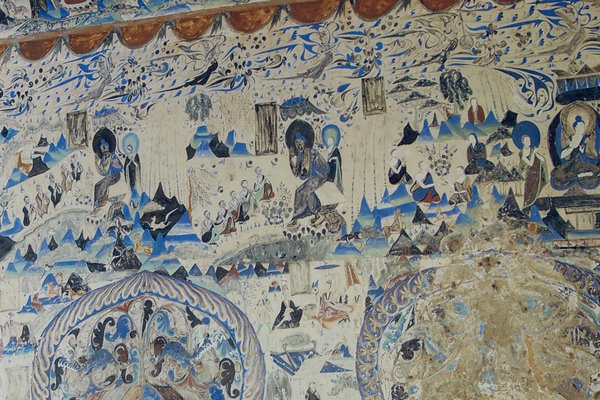
Mural Painting
Introduction
Mural painting is an art form that involves the creation of artworks on walls or ceilings, which are often integrated into architectural structures. The tradition of mural painting spans across various cultures and historical periods, offering insight into the social, political, and cultural landscapes of their times. Murals are recognized for their ability to transform spaces and communicate narratives and have been an important medium for artistic expression and community engagement.
Historical Significance
Mural painting has played a significant role throughout history, serving as a visual documentation of society and a means of public communication. The murals of ancient civilizations, such as those found in Egyptian tombs or Roman villas, depicted daily life, mythology, and religious beliefs. In China, mural painting has a rich tradition, with notable examples such as the murals in the Mogao Caves in Dunhuang, which date back to the 4th century and illustrate Buddhist themes and stories.
During the Renaissance, murals experienced a resurgence in Europe, with artists like Michelangelo creating iconic works such as the Sistine Chapel ceiling. These works not only demonstrated the skill and creativity of the artists but also reflected the religious and cultural values of their time.
Techniques and Styles
Mural painting encompasses a variety of techniques and styles, depending on the materials available and the cultural context. Traditional techniques include fresco, where pigments are applied to wet plaster, and secco, where paints are applied to dry surfaces. In China, zhongcai (重彩), or heavy-color painting, is a traditional technique characterized by the layering of vivid pigments to create detailed and vibrant images.
Modern muralists often employ a mix of traditional and contemporary techniques, utilizing materials such as acrylics and spray paints, which allow for a broader range of effects and styles. The evolution of technology has also introduced digital murals, which use digital art to animate and project artworks onto surfaces, creating interactive and immersive experiences.
Contemporary Mural Painting
Mural painting continues to thrive today, with artists using this medium to address current social issues, revitalize urban spaces, and celebrate cultural heritage. Public and community art projects often feature murals as a way to engage communities, offering a platform for collective expression and storytelling.
Chinese artists, like Wen Na, blends traditional Chinese cultural elements with modern aesthetics, and Zhang Lijia, who shares her mural creation process on social media platforms. These artists use murals to connect with audiences, exploring themes of identity, heritage, and modernity.
Preservation and Restoration
The preservation of historical murals is an essential aspect of cultural heritage conservation. Chinese experts like Li Sen, who work on restoring ancient Chinese murals, play a crucial role in safeguarding these invaluable artworks. The restoration process involves meticulous techniques to clean, repair, and preserve murals, often drawing parallels with medical surgery in its precision and care.
Efforts to digitize and document murals, such as those undertaken by institutions like the Dunhuang Academy in collaboration with technology companies, are vital for ensuring that these cultural treasures are accessible to future generations. These digital initiatives help in teaching and sharing the muralist tradition with a wider audience, promoting cultural education and appreciation.
Cultural Impact
Murals have a profound cultural impact, serving as both historical records and contemporary voices. They provide insights into the values, beliefs, and daily lives of past societies while allowing contemporary artists to comment on modern issues and celebrate cultural diversity. The accessibility of murals in public spaces makes them a powerful medium for communication and engagement, capable of inspiring and uniting communities.
Murals also foster a sense of identity and pride, as seen in the work of artists who draw upon their cultural heritage to create resonant and meaningful artworks. Through their ability to transform spaces and evoke emotions, murals remain a vital and dynamic art form, bridging past and present and enriching the cultural tapestry of societies worldwide.








